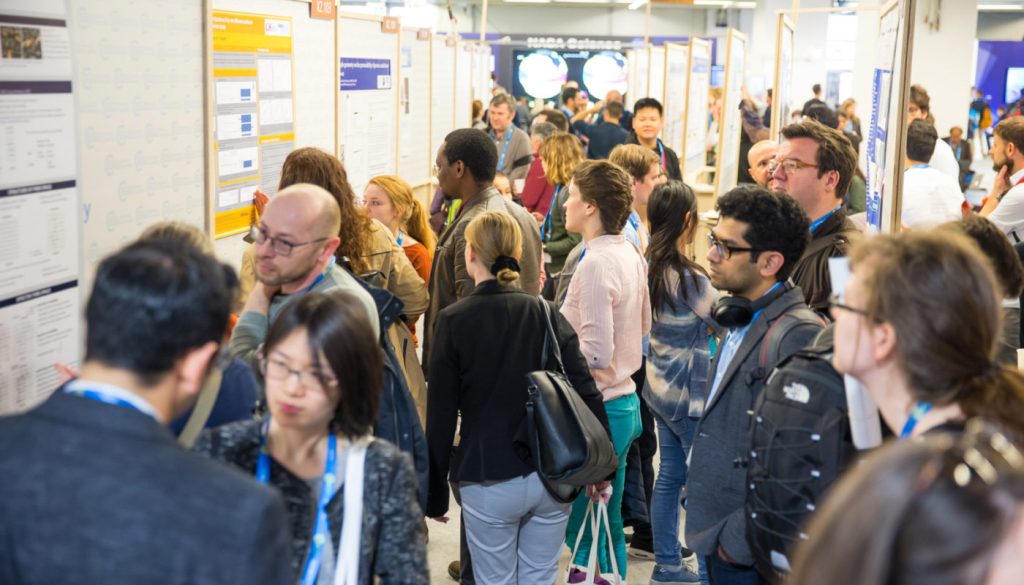
EGU 2026 once again highlighted the scale and energy of the global geoscience community. Over 22,000 participants from more than 120 countries came together to share 20,000+ presentations across over 1,000 sessions. With strong participation from early-career researchers and a lively mix of in-person and virtual exchanges, the week reflected a community deeply engaged in connecting across disciplines and borders to discuss and advance geoscience research.
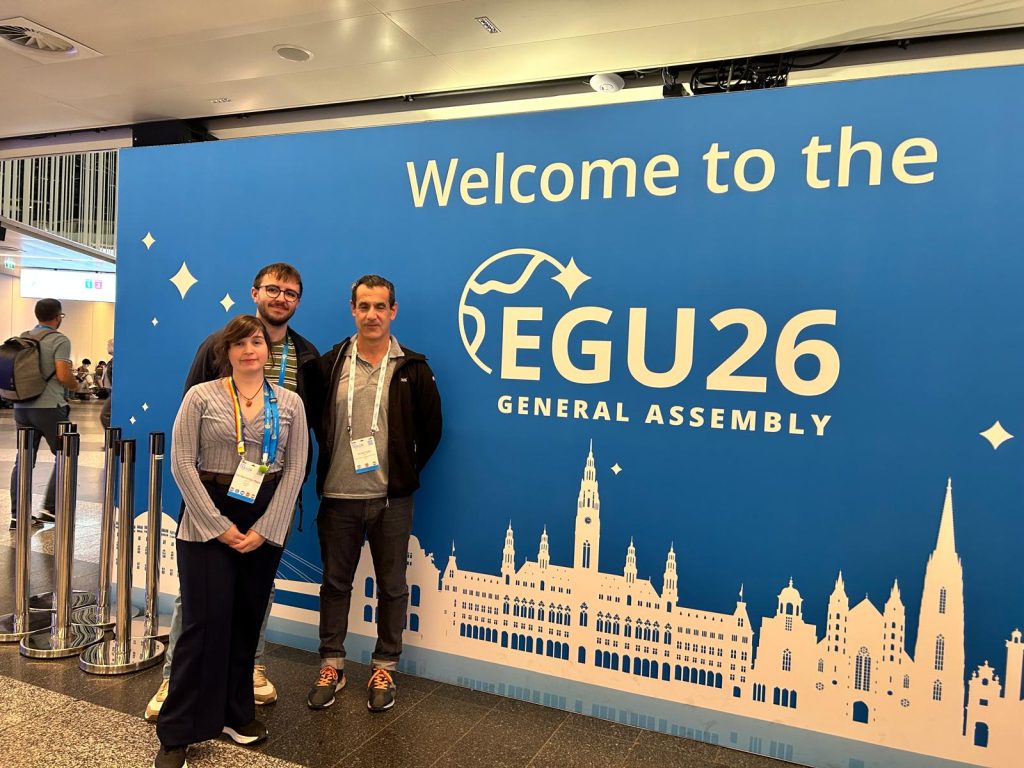
ChEESE had a strong presence at EGU 2026, spanning volcano modelling, seismic hazard workflows, and tsunami early warning research, with posters, oral talks, and session convening. Full programme: Explore the ChEESE participation at EGU 2026 in Vienna.
EPOS GO! Prize for Juan Francisco Rodríguez Gálvez
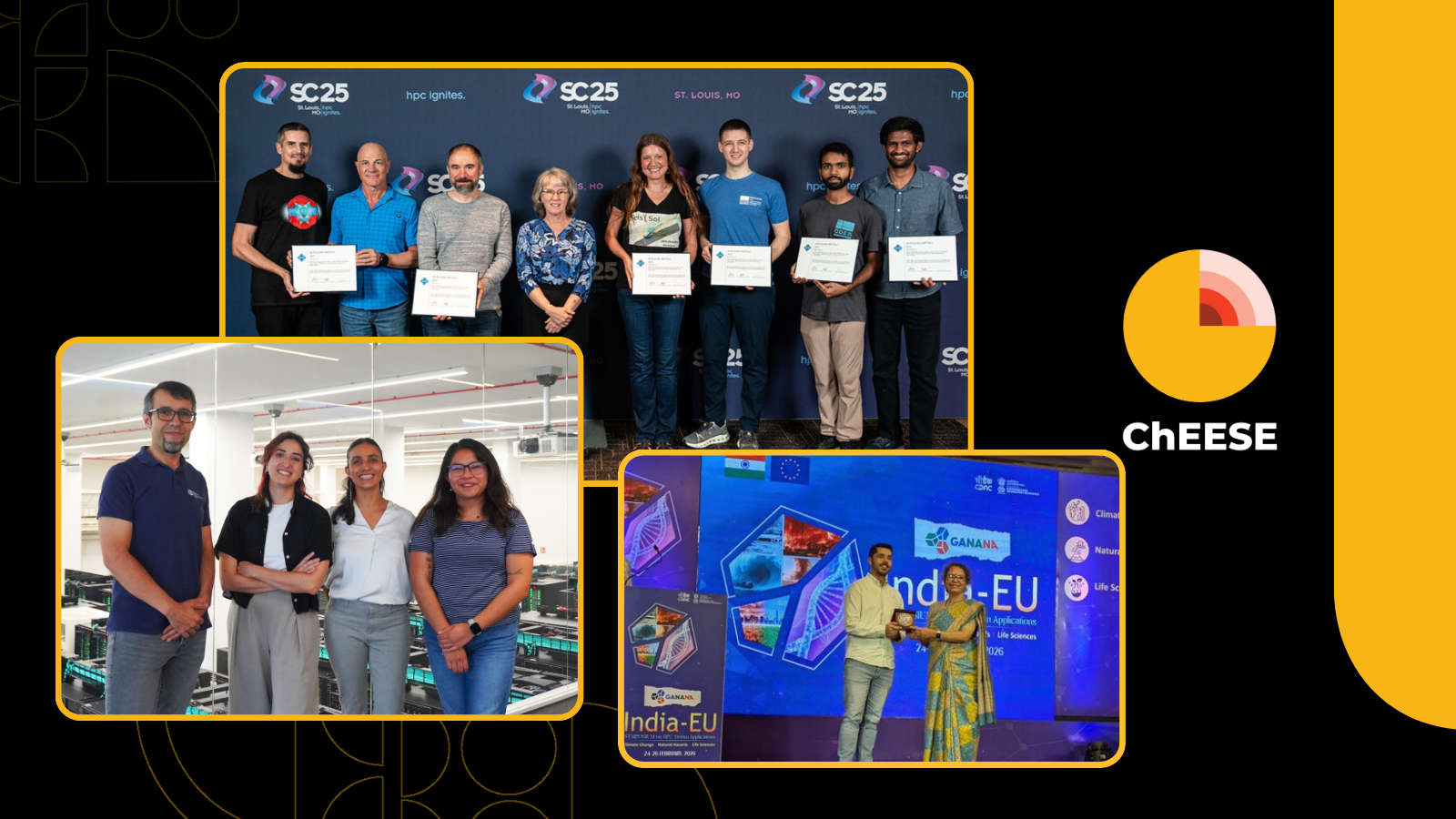
One of the week’s standout moments came with recognition beyond the ChEESE community: Juan Francisco Rodríguez Gálvez received the EPOS GO! Prize (Go! Challenge) for his work with Spain’s Instituto Geográfico Nacional (IGN) to strengthen tsunami early warning in Spain. The EPOS GO! Prize supports early-career scientists working with inter- and transdisciplinary data, and recognises excellent research that tackles complex Earth system challenges through cross-disciplinary approaches.
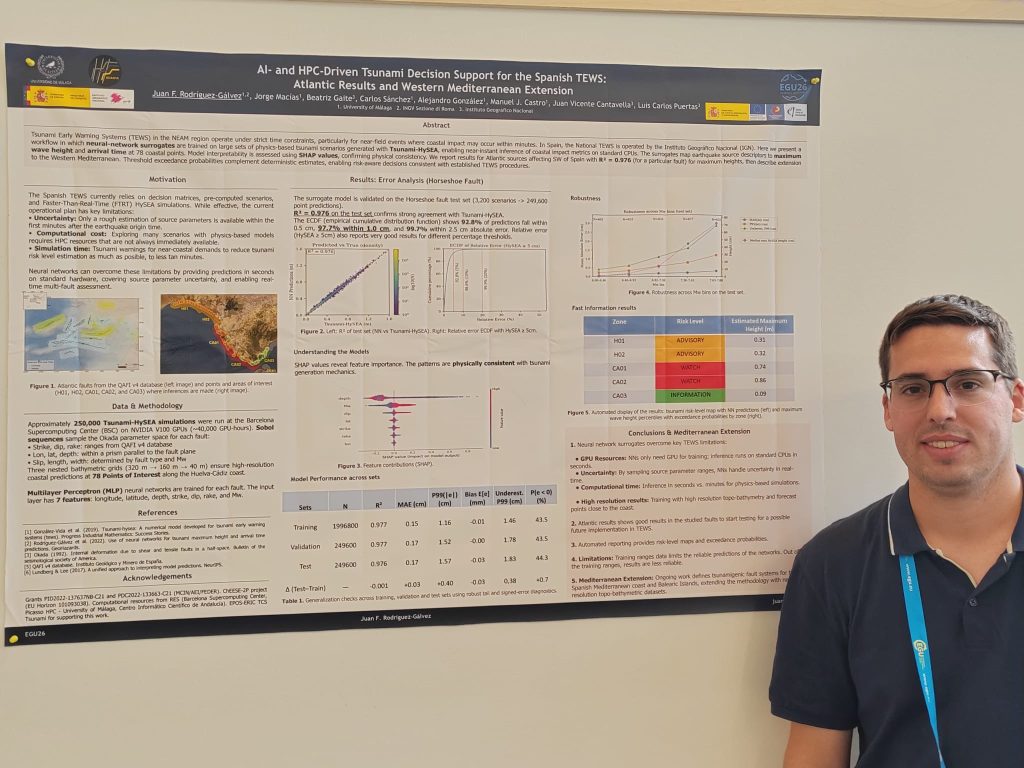
The project focuses on reducing the time it takes to provide early guidance after an earthquake. Standard numerical simulations are often slow to resolve when every second count, so the team trained neural networks using a database of 250,000 precomputed simulations run on supercomputers.
By handling the heavy computation during the training phase, the model can estimate coastal impacts in seconds once earthquake parameters are known. This provides critical data almost immediately, without needing a supercomputer at the moment of the crisis. This data is intended to complement the current alert system, offering almost instant guidance while more detailed modelling follows.
The team also integrated SHAP values as an interpretability layer. This helps researchers understand the reasoning behind specific predictions, test model robustness, and identify cases where input data might fall outside the training range. Currently, the system is calibrated for the Atlantic sector (Huelva and Cádiz), with plans to extend training to the Mediterranean next.
This work was presented at EGU in the poster “AI- and HPC–Driven Tsunami Decision Support for the Spanish TEWS: Atlantic Results and Western Mediterranean Extension” (EGU26-10252), alongside Jorge Macías Sánchez, Alejandro González del Pino, and colleagues.
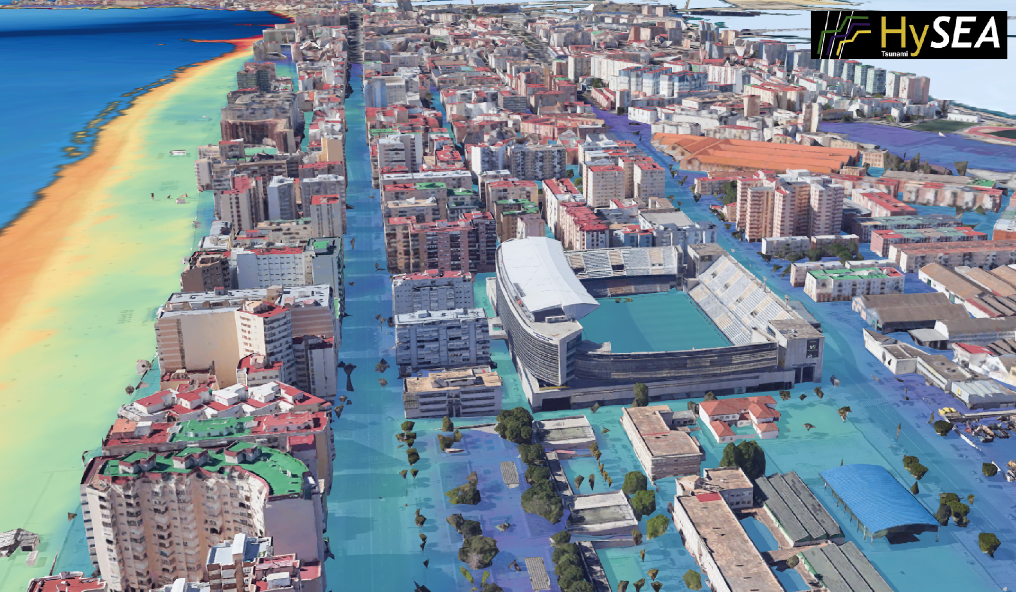
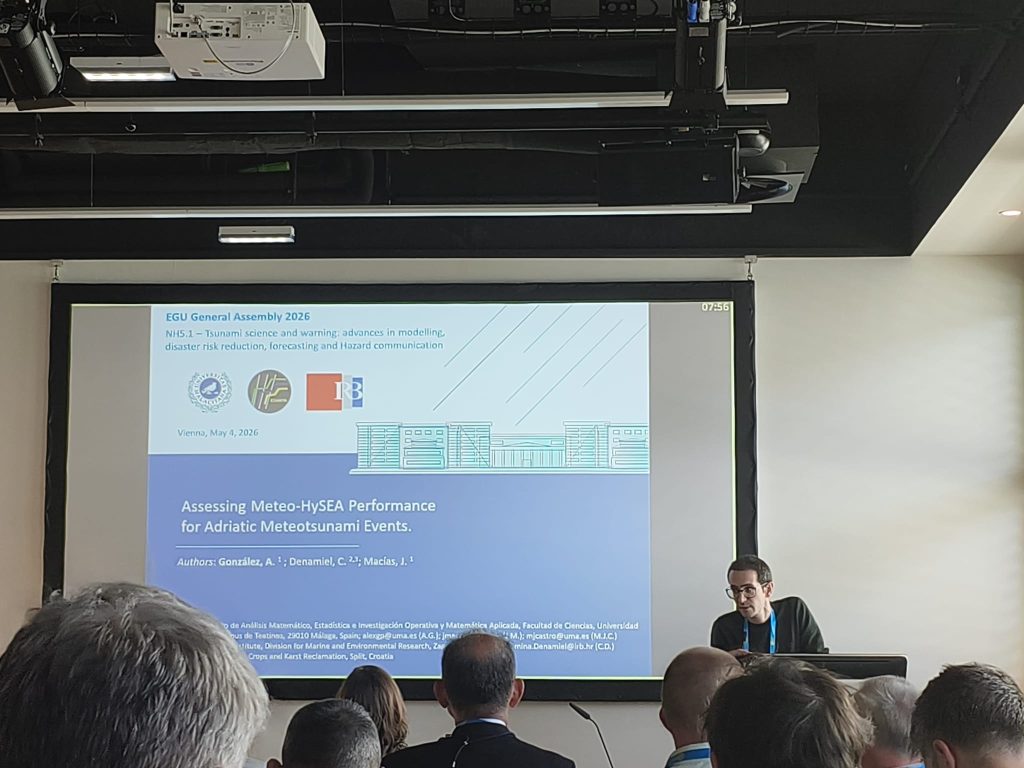
Tsunami research had a strong ChEESE presence throughout the week, with Jorge Macías Sánchez contributing to several oral presentations, covering source processes, high-resolution propagation, and probabilistic hazard assessment. Alejandro González del Pino also presented results on Meteo-HySEA performance for Adriatic meteotsunami events.
Volcano hazards: sharper inputs, stronger workflows
On the volcanic side, ChEESE contributions kept a clear focus on what turns research into something usable: better meteorology, better assimilation, better end-to-end workflows.
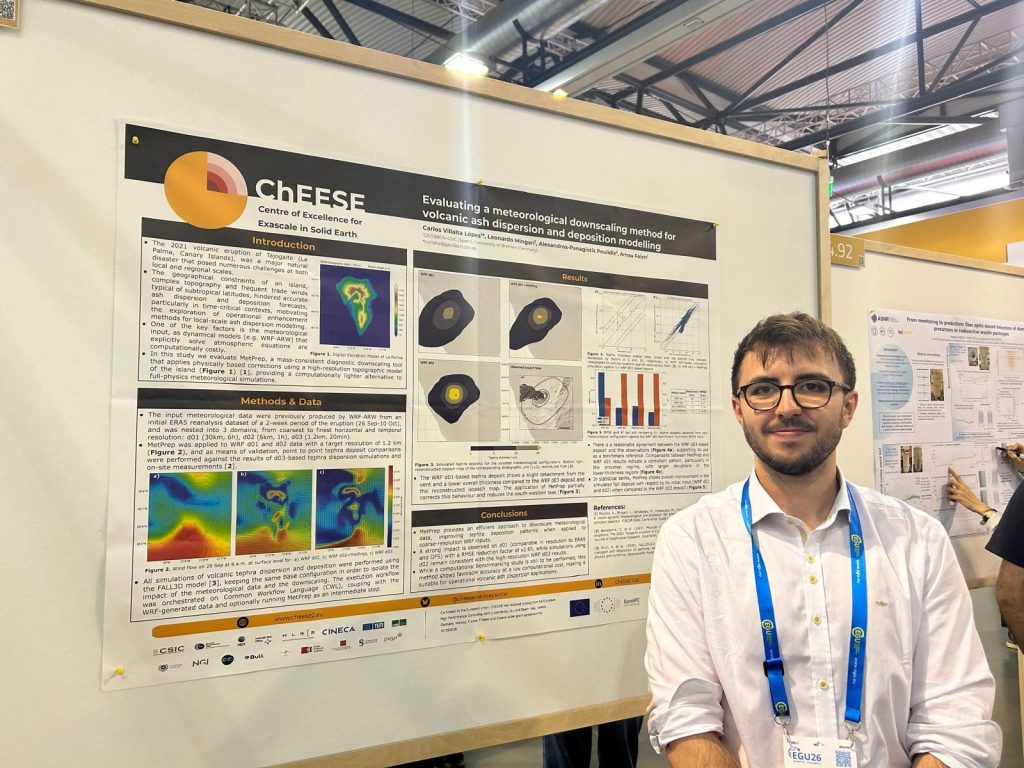
Carlos Villalta López, with Arnau Folch, presented a poster on meteorological downscaling for volcanic ash dispersion and deposition modelling (EGU26-6903).
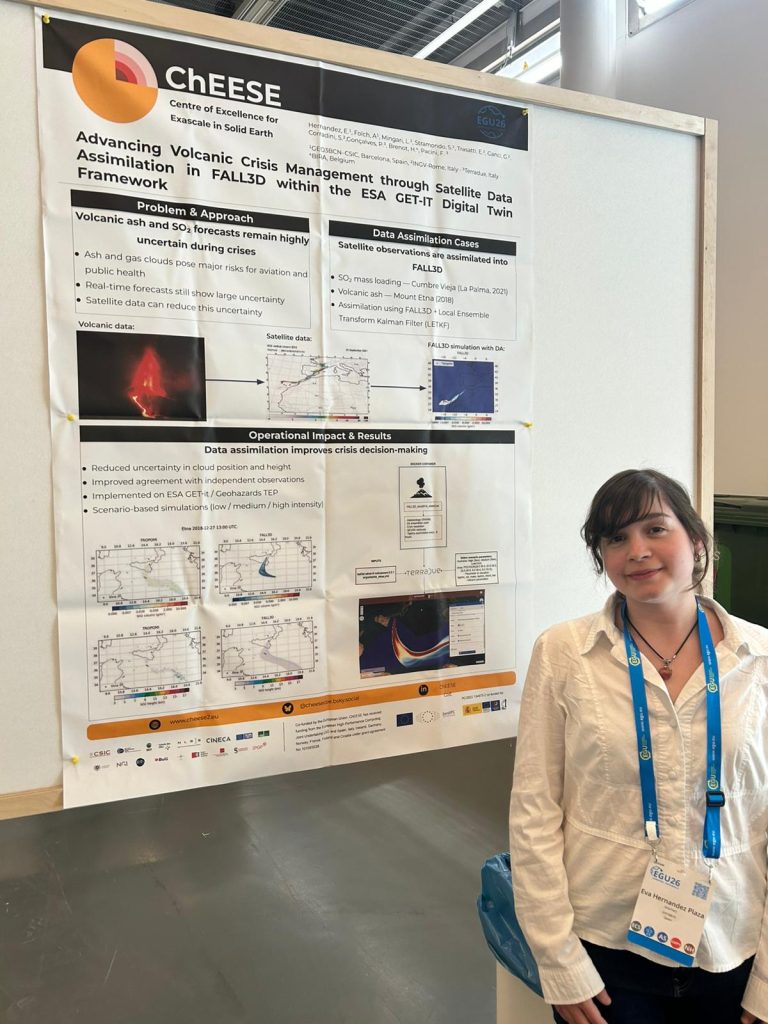
Eva Hernandez Plaza presented work on satellite data assimilation in FALL3D within the ESA GET-it digital twin framework (EGU26-9859).
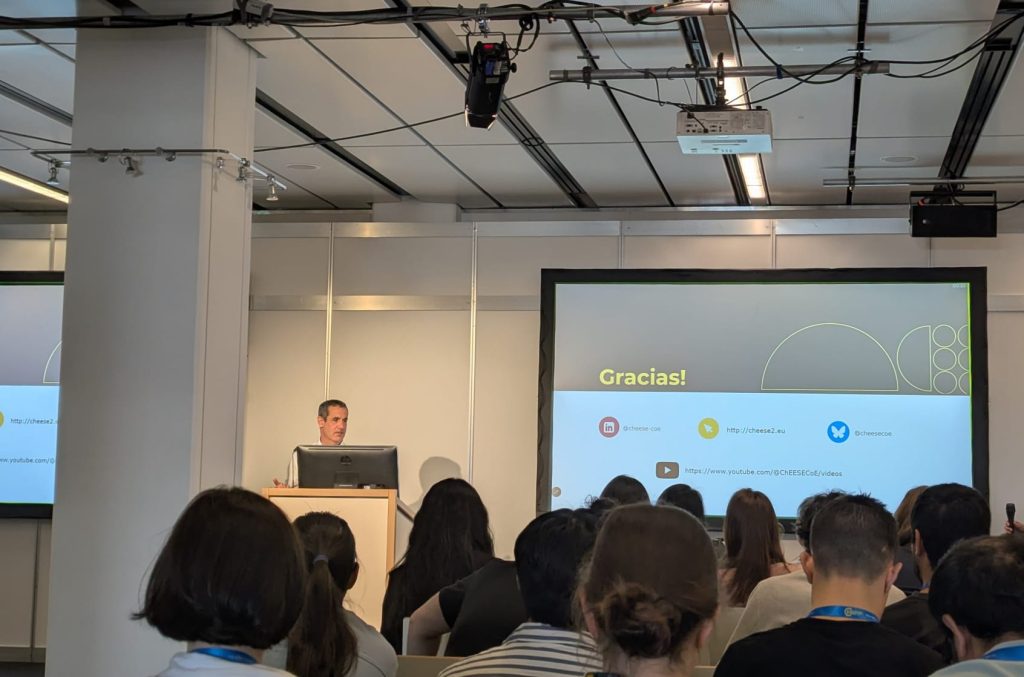
Arnau Folch also delivered the oral “ChEESE: the European Center of Excellence for supercomputing in geosciences” (EGU26-5866), highlighting how improved workflows and HPC capacity make hazard science more reproducible and reliable.
Ground shaking, AI, and keeping the physics in the loop
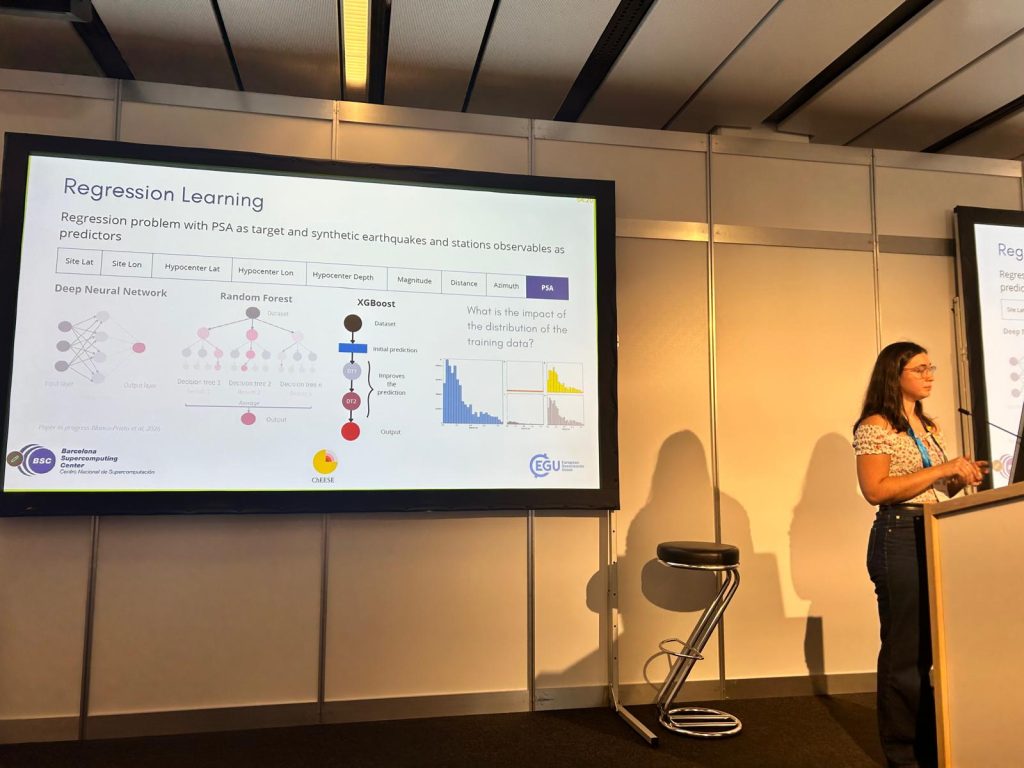
Rut Blanco-Prieto presented an oral talk on using machine learning to estimate ground shaking maps based on physics-based simulations: “From physics-based simulation to ground motion models using a Machine-Learning Estimator for Ground Shaking Map” (EGU26-1865).
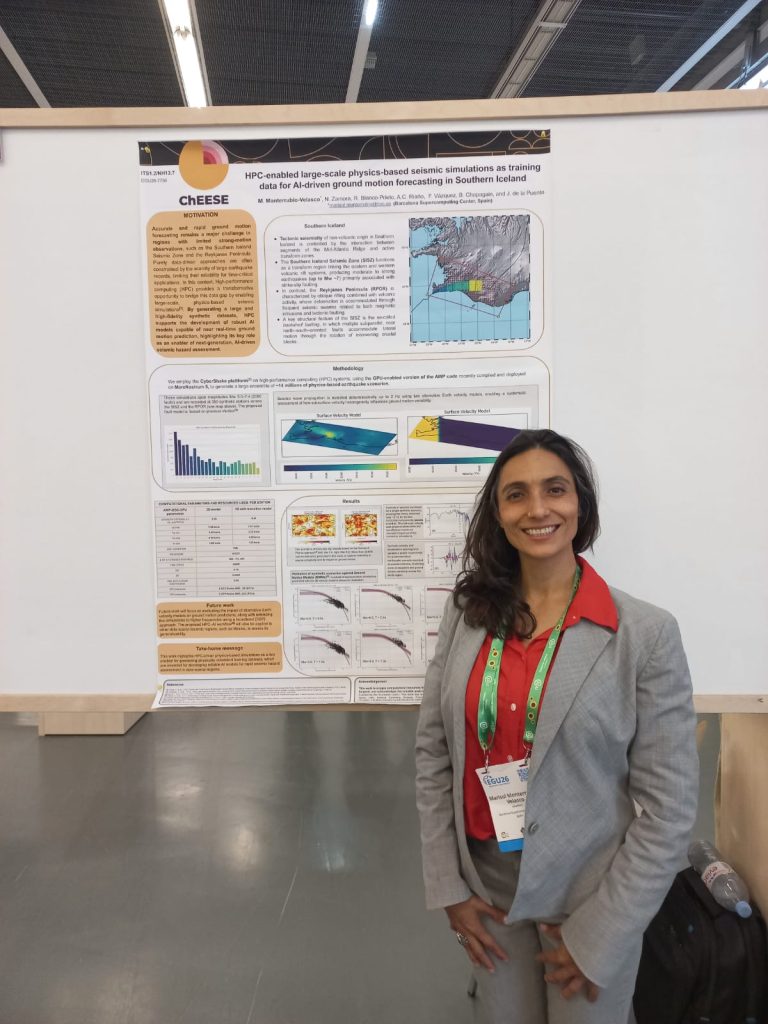
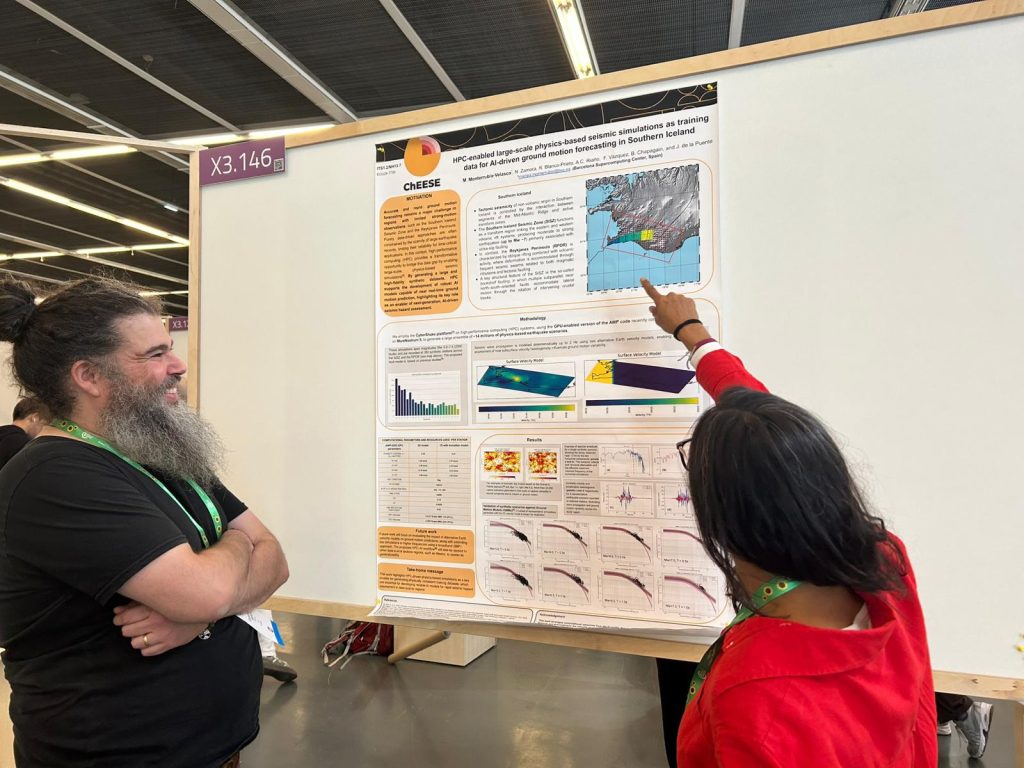
Marisol Monterrubio-Velasco presented a poster on using large-scale physics-based simulations as training data for AI-driven ground motion forecasting (EGU26-7756).

Convening the conversation
Beyond presenting results, ChEESE researchers also helped shape the conversation at EGU by convening sessions. Marisol Monterrubio-Velasco and Jorge Macías co-convened ITS1.2/NH13.7, focused on AI and HPC for natural hazard resilience, while Arnau Folch co-convened ESSI2.2 on high-performance computing with big data in the geosciences.
These participations represent a summary of ChEESE’s work at this year’s assembly. Further details and links to all abstracts can be found in the full programme overview.
Credits
- Published
- 12 May 2026
- Author:
- Varvara Vedia — ChEESE-2P Dissemination Team
- Photos:
- Pfluegl/EGU, Juan Francisco Rodríguez Gálvez, Arnau Folch