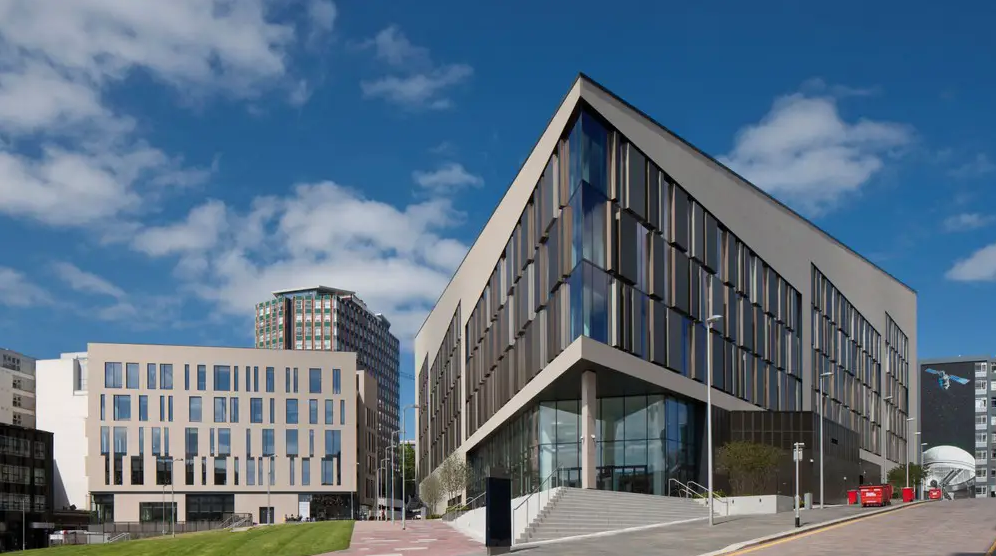
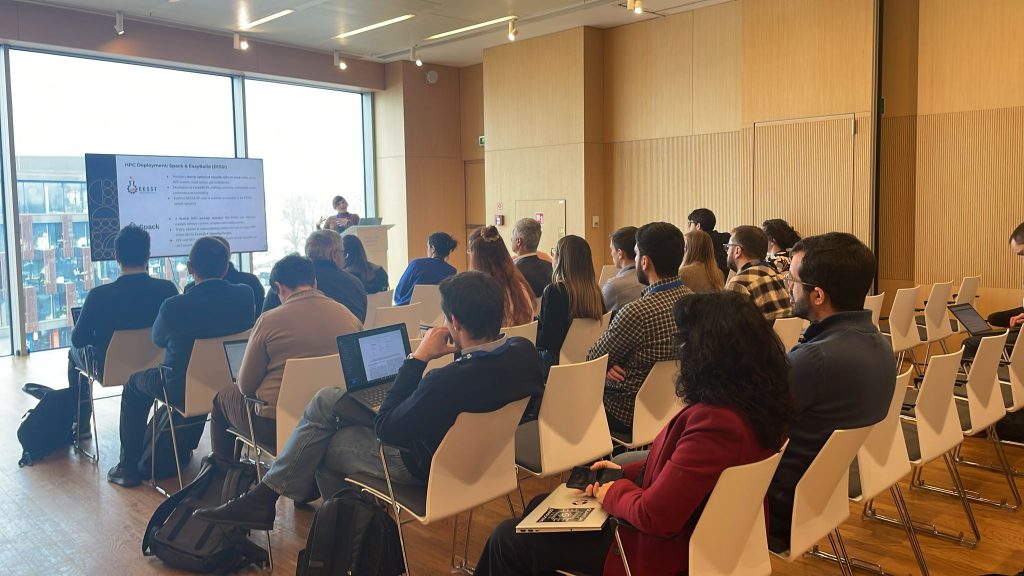
The transition to exascale computing is not just a matter of more power; it is a fundamental shift in how we handle scientific data and legacy code. This was the central theme of the workshop “Rethinking Scientific Applications for Exascale and Emerging Architectures”, held on January 27 during the HiPEAC 2026 conference.
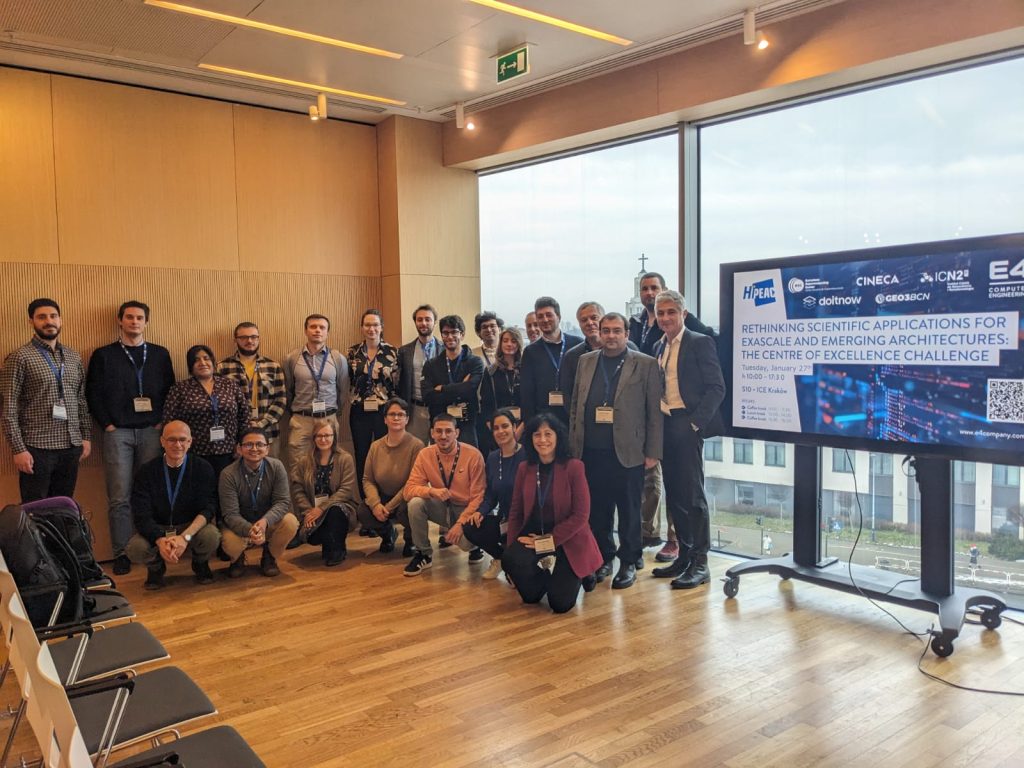
Co-organised by a broad team of European Centres of Excellence (CoEs), the workshop was designed as a shared space to align efforts across domains and communities. It successfully connected expertise from HPC and quantum computing while encouraging open exchange on what it takes to modernise scientific software for heterogeneous, next-generation platforms.
Central to the workshop’s mission was the belief that the future of European HPC must be built on diverse talent. Rather than a secondary goal, the active inclusion of early-career researchers and scientists from underrepresented groups was a core pillar of the event. By prioritizing these voices, the organisers ensured that the technical roadmap for the exascale era is reinforced by a more inclusive and representative European computing ecosystem.
As a co-organiser, the ChEESE Centre of Excellence helped shape discussions on practical strategies for adapting or rewriting legacy codes, improving performance portability, and strengthening sustainable software practices.
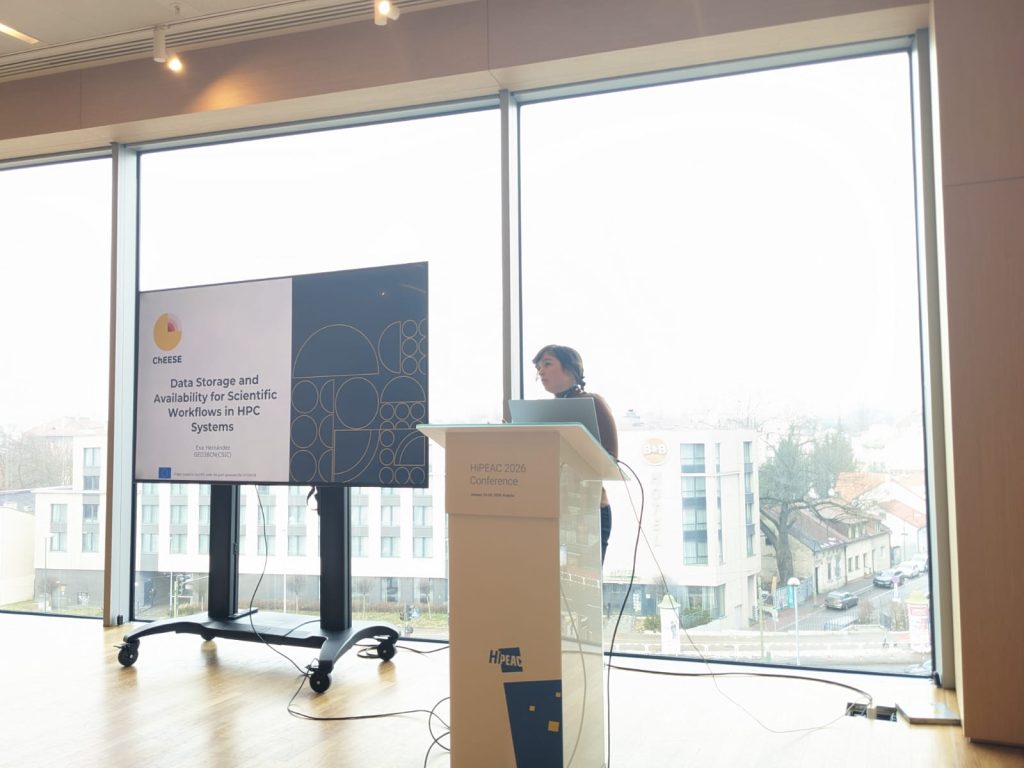
A highlight of the session was the presentation by Eva Hernández (GEO3BCN-CSIC), who represented ChEESE with a talk on “Data Storage and Availability for Scientific Workflows in HPC Systems.” Eva detailed ChEESE’s move toward a unified GitLab-based infrastructure and the embedding of FAIR principles (Findable, Accessible, Interoperable, and Reusable) by design. She also showcased ongoing work on portable HPC deployments using Spack and EESSI, enabling consistent execution of workflows and codes such as FALL3D across EuroHPC systems.
By bringing many CoEs around the same table, the workshop reinforced a simple message: reaching exascale is a collective challenge. Progress depends as much on collaboration, openness, and good data practices as it does on hardware.
More information
Download the full agenda: HiPEAC26 AGENDA.
Download the Speaker Booklet: HiPEAC 2026 Speaker Booklet.
Credits
- Published
- 3 February 2026
- Author
- Varvara Vedia — ChEESE-2P Dissemination Team
- Photos
- Nitin Shukla, Gabriella Bettonte, and Tiziana Liberati