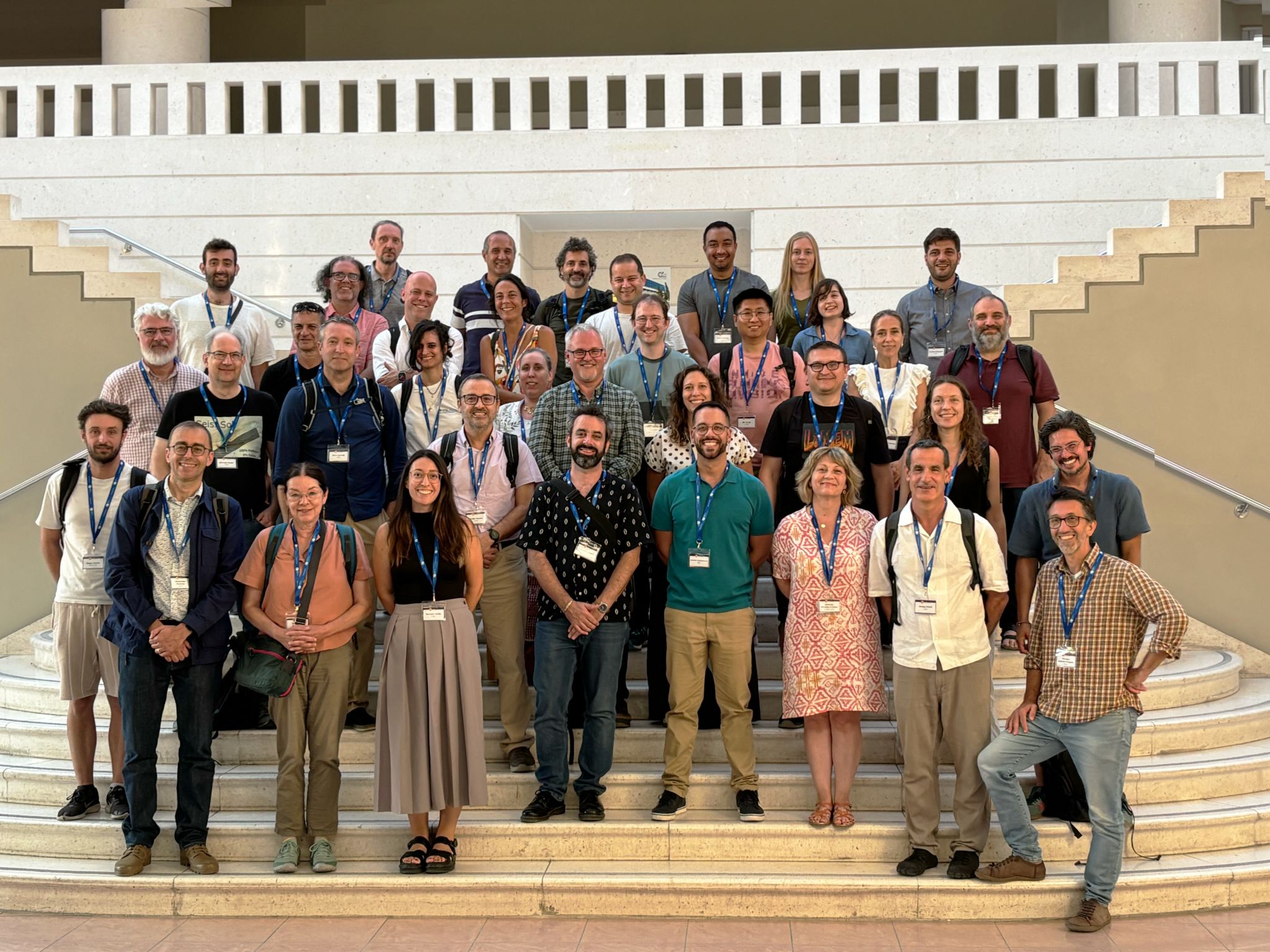
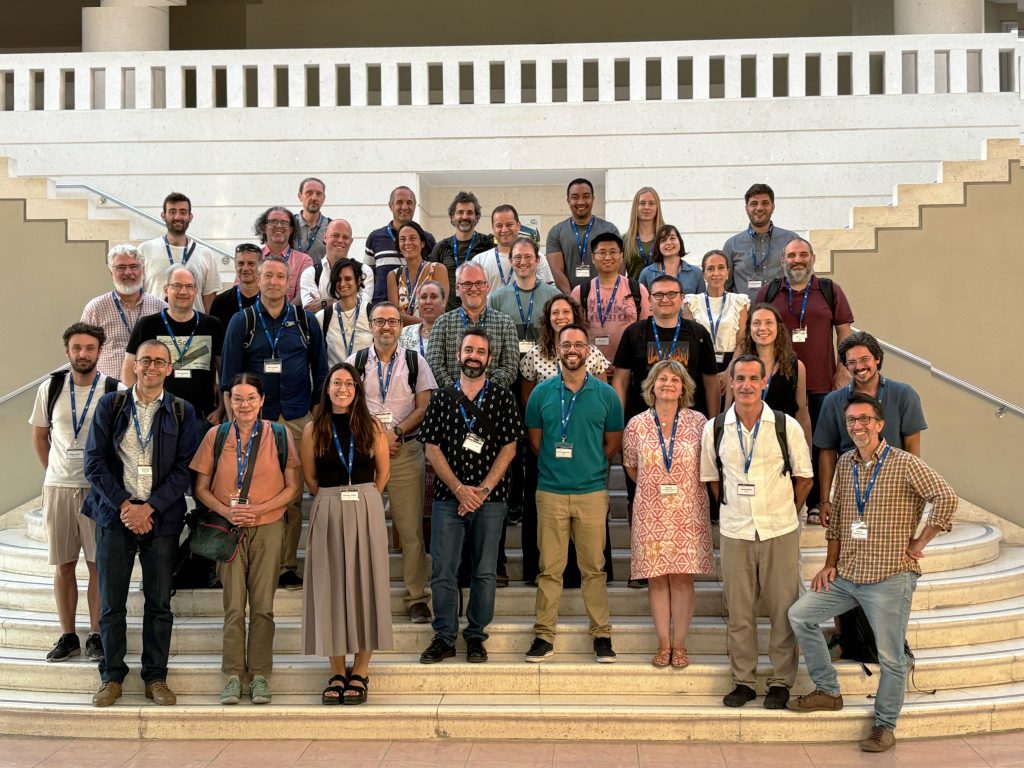
From 16 to 18 September, representatives of the ChEESE-2P consortium – 18 partner institutions from 10 countries – met in Split, Croatia, for the last project’s General Assembly, hosted at the Faculty of Economics, Business and Tourism of the University of Split. Over three days of sessions, work package leaders presented the status of deliverables and milestones, discussed pending tasks, and looked ahead to the project’s closure.
With the project now three months from completion, the meeting offered a good opportunity to review what has been achieved. Of the 46 planned deliverables, 29 have already been submitted, and 8 of the project’s 10 milestones have been fully met, with two work packages – on co-design with European HPC vendors and on the Farming Pilot Demonstrators – already concluded. Partners reported strong progress across the project’s flagship codes, including two rounds of performance audits, improved portability across NVIDIA and AMD accelerators, and the development of seven mini-apps ported to EuroHPC pre-exascale prototypes. Seventeen workflows and nine pilot demonstrators have been successfully implemented and tested, supported by more than one million node-hours of computing time on EuroHPC systems such as Leonardo, LUMI, MareNostrum5 and Vega.
The consortium’s impact was also reflected in its dissemination record, with 33 paper publications by now, over 70 conference participations and 18 videos produced to date – all above the project’s original targets – alongside recognition through international awards for the ChEESE researchers, including the 2025 ACM Gordon Bell Prize and the HPC Innovation Excellence Award. During the visit to Split, researcher Clea Denamiel, from the Ruđer Bošković Institute in Croatia, also gave partners insight into meteotsunamis, a phenomenon closely linked to the region’s coastal hazards.
The Split assembly also marked the moment of transition towards the project’s next phase. Outgoing coordinator Arnau Folch formally passed project coordination to Mattia de’ Michieli Vitturi, who will lead ChEESE-Factory, the third phase of the Centre of Excellence for Exascale in Solid Earth set to launch in January 2027 under the coordination of INGV. Building on eight years of continuous collaboration since the original ChEESE project began in 2018, the new centre will carry forward the community’s work in supercomputing and artificial intelligence applied to Earth sciences, reinforcing Europe’s role at the frontier of exascale geohazard modelling.
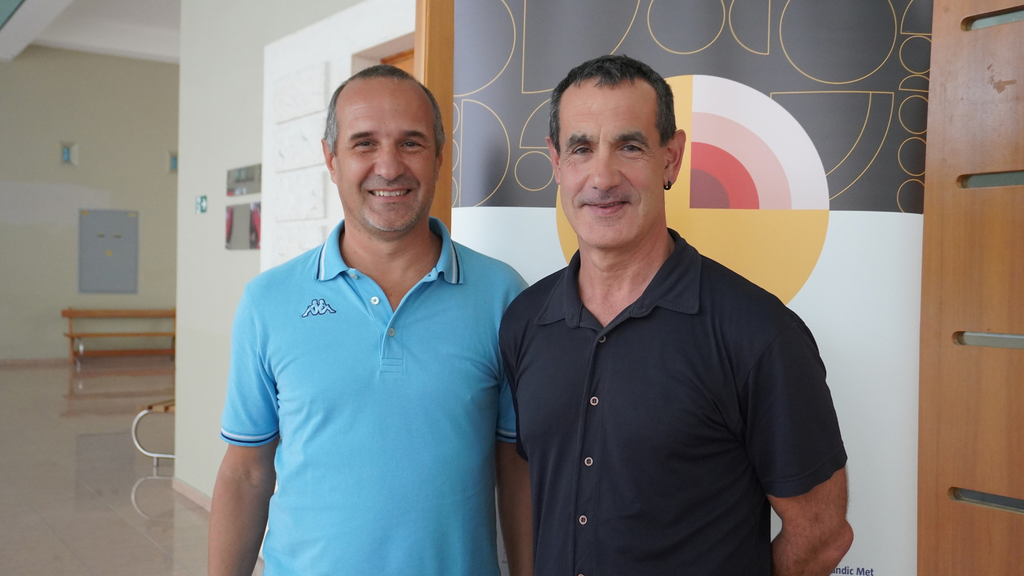
Mattia de’ Michieli Vitturi and Arnau Folch
Credits
- Published
- 22 September 2026
- Author
- Aerton Guimarães – ChEESE-2P Dissemination Team
- Photos
- Aerton Guimarães & Varvara Vedia – ChEESE-2P Dissemination Team