
Ample research demonstrates gender-based inequities in science, including a lack of visibility for female scientists’ work regardless of their career stage. Studies have shown that women experience gender bias throughout the publishing process. For example, women authors often need to meet higher standards to get published and are disproportionately affected by unprofessional peer reviews (1). Once published, their work tends to receive less recognition—female-authored research is less frequently cited, and women scientists are underrepresented in speaking engagements at elite universities (2).
Unbiased science dissemination has the potential to alleviate some of these inequities by making female scholars’ work more visible to both the scientific community and the public. However, it comes with an additional workload that is often undervalued and does not carry the same academic weight as publishing papers or participating in events such as conferences or congresses.
The Equality Committees of DT-GEO and ChEESE—projects that share a significant number of researchers—joined forces this February 11th to analyze their dissemination records and examine who is actively bringing science closer to society. Their findings reveal a stark contrast: while men dominate scientific conferences and high-profile events, it is mostly women who take on the responsibility of engaging with schools and the broader public through outreach activities.
On this International Day of Women and Girls in Science, we want to highlight this crucial yet often overlooked labor. Here are some examples of women researchers within these projects who have gone out of their way to bring science closer to people, demonstrating once again that true progress in academia must acknowledge and fairly distribute the invisible work of science communication.
Beata Orlecka-Sikora
As part of her work in DT-GEO WP8, Prof. Beata Orlecka-Sikora, Head of the Department of Seismology at the Institute of Geophysics PAS, actively engages in outreach initiatives to raise awareness about anthropogenic seismicity and seismic hazard assessment. Through lectures and hands-on training, she aims to inspire young researchers, particularly women, to explore the societal applications of geosciences.
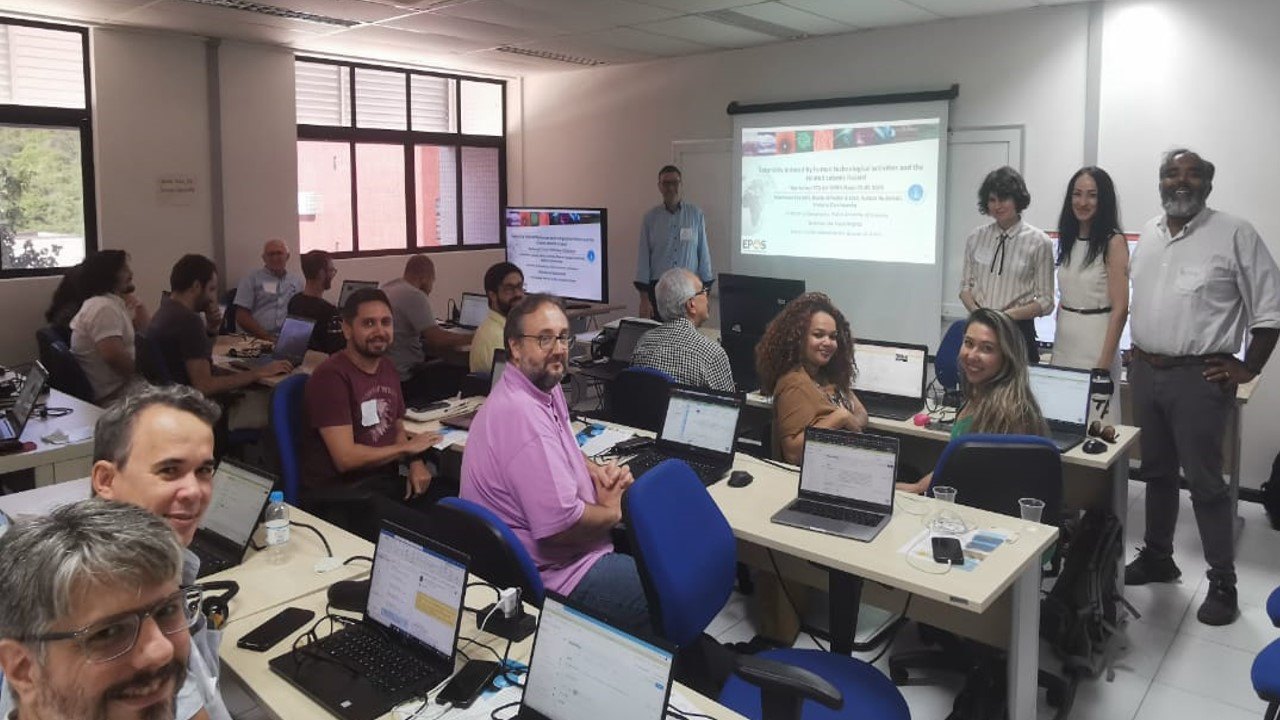
One such initiative was her participation in the Seismicity Induced by Human Technological Activities and the Related Seismic Hazard Workshop at the University of Pretoria, where she introduced students to the fundamentals of induced seismicity, its risks, and hazard forecasting methodologies. Another key event was the 1st 2023 EPOS TCS AH workshop, held at the Federal University of Rio Grande do Norte (UFRN) in Natal, Brazil. Hosted by the Seismological Lab, Department of Geophysics UFRN, the workshop gathered 21 participants from universities, the Geological Survey of Brazil, and the private sector, including Veneto Consultoria em Mineração, JMC – Yamana Gold, and Braskem Bairros.
During the workshop, participants engaged in discussions and lectures on anthropogenic seismic processes and associated hazards, followed by hands-on training on the EPISODES platform. Using real data, attendees analyzed anthropogenic seismic hazards, gaining both technical knowledge and practical experience. The event was led by Beata Orlecka-Sikora, Łukasz Rudziński, and Stan Lasocki, with assistance from Helena Ciechowska (IG PAS) and support from Aderson do Nascimento (UFRN). Given the workshop’s success, participants requested its repetition as a side event at a geological conference in Rio de Janeiro later that year!
Beyond workshops, Beata is also a committed member of AcademiaNet: The Portal to Excellent Women Academics, further underscoring her dedication to advancing women in science.
Chiara Montagna
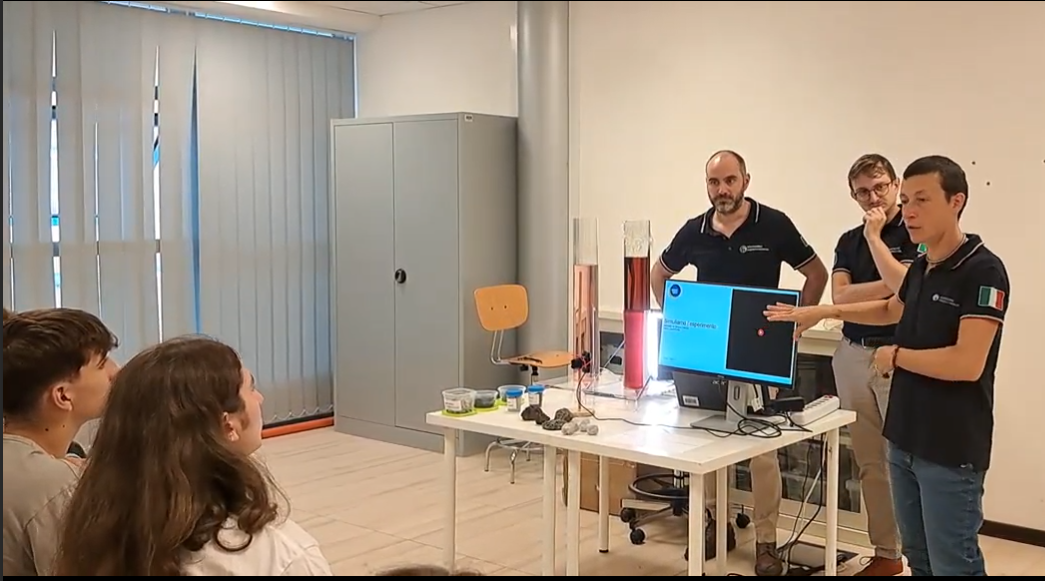
Chiara Montagna, a researcher at the Istituto Nazionale di Geofisica e Vulcanologia (INGV), has been actively involved in science outreach, particularly during the European Researcher’s Night in September 2024. During this event, she engaged with a senior high school class in Pisa, demonstrating how bubbles rise in magmas with different viscosities and how this affects the explosivity of volcanic eruptions. INGV also set up a public stand, where attendees could participate in small-scale experiments to better understand volcanic dynamics.
Nathalie Favretto-Cristini
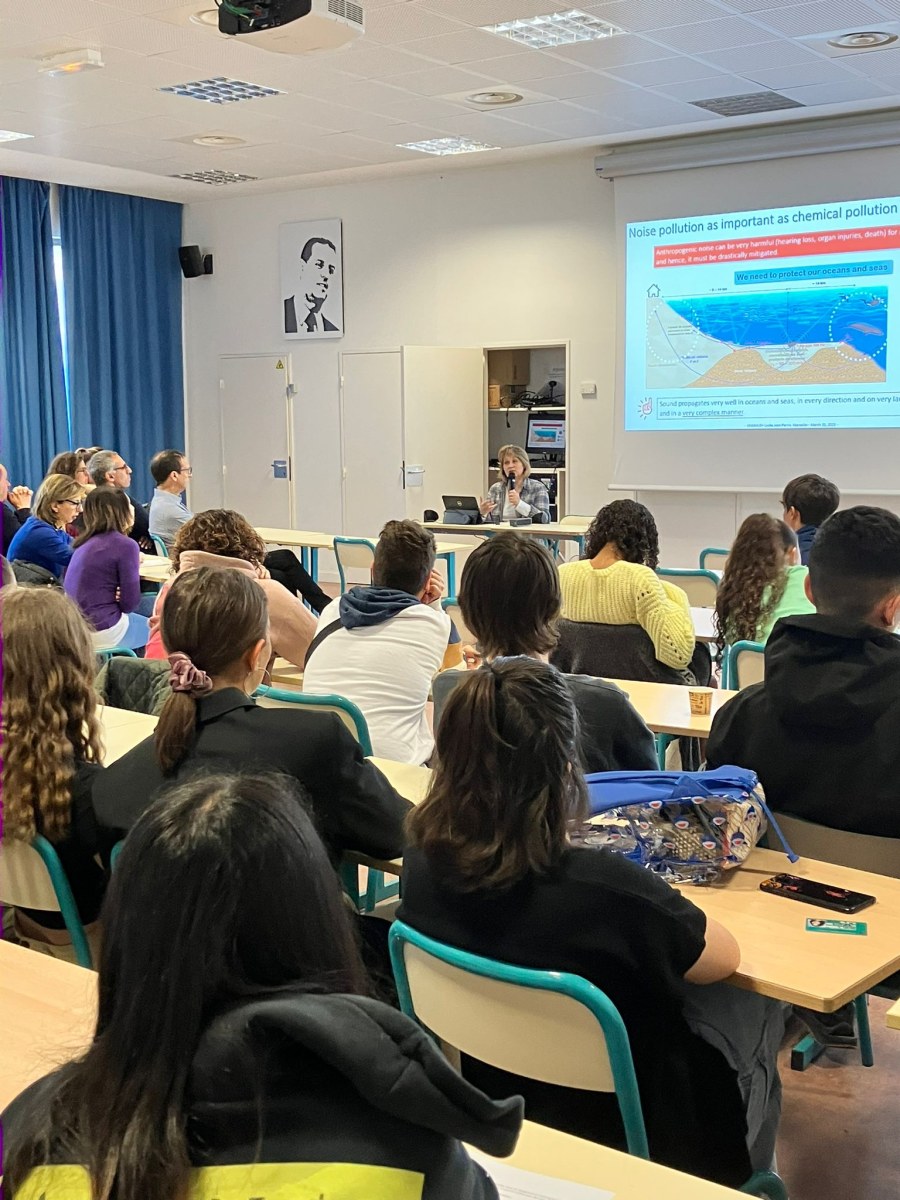
Nathalie Favretto-Cristini, Directrice de Recherche at CNRS HDR, is deeply committed to science outreach. She frequently visits schools to discuss her career path, aiming to inspire both girls and boys to pursue science. Her presentations focus on underwater noise pollution and its impact on marine animals, drawing attention to its harmful effects, comparable to microplastic pollution.
Nathalie’s outreach efforts highlight the necessity of interdisciplinary collaboration between physics, biology, mathematics, and engineering to develop effective noise mitigation solutions. She often illustrates this by sharing insights from her work in SEASOUNDS and ChEESE. In 2024, she visited two high schools in Marseille and Aubagne and participated in Fête de la Science in Marseille.
Paula Herrero Barbero
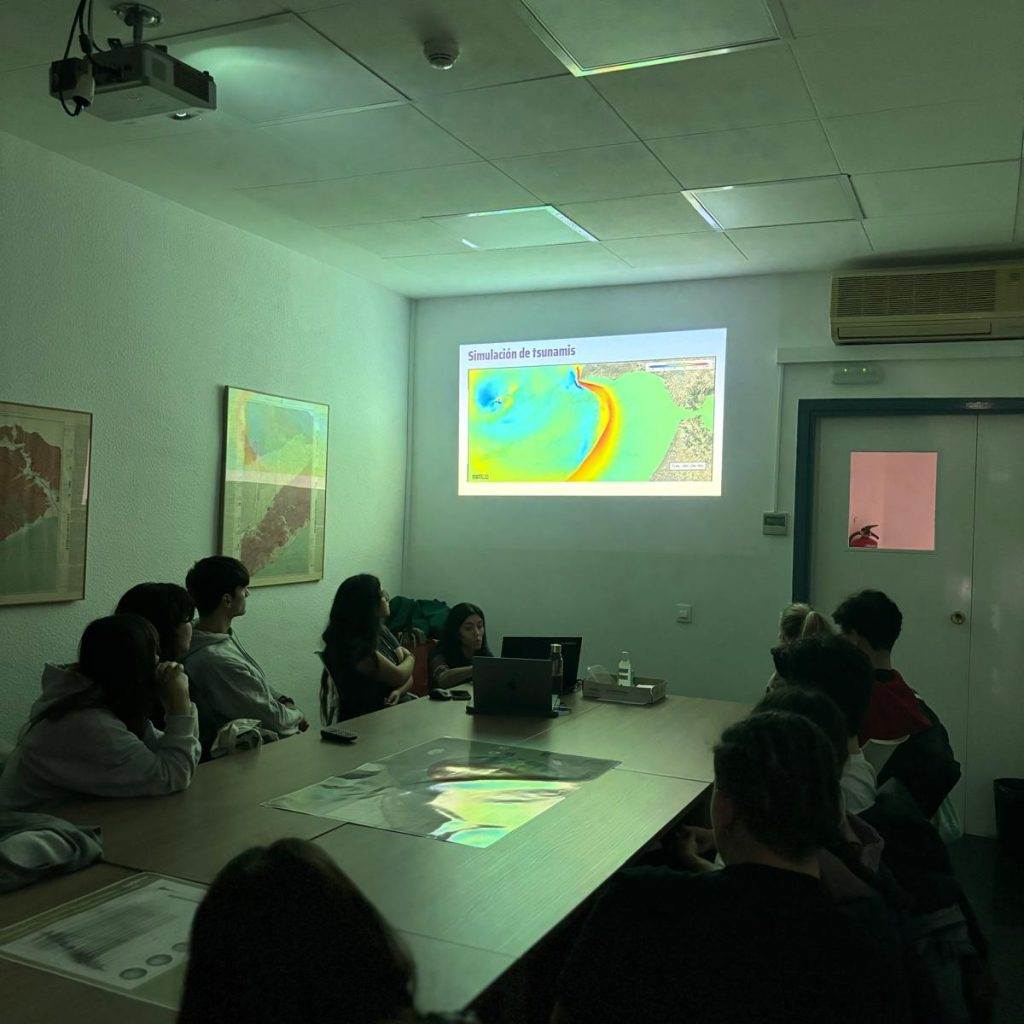
Paula Herrero Barbero, a postdoctoral researcher at Geociencias Barcelona (GEO3BCN-CSIC), has been actively involved in outreach activities aimed at educating young students about earthquakes. As part of the 2024 Science Week, she delivered an engaging talk to students of the Centre López Vicuña in Barcelona, offering high school students insights into seismic events and their impacts. Through her efforts, Paula continues to foster curiosity and awareness in geosciences among younger generations.
Louise Cordrie
Louise Cordrie, DT-GEO researcher from INGV, has actively contributed to geoscience outreach through her participation in key scientific events. In September 2024, she presented her work on Dynamic Lava Flow Forecasting with Real-Time Data Integration during the Rittman Conference in Catania. Her research, conducted within DT-GEO, focuses on improving lava flow prediction by integrating real-time data, enhancing hazard mitigation strategies.
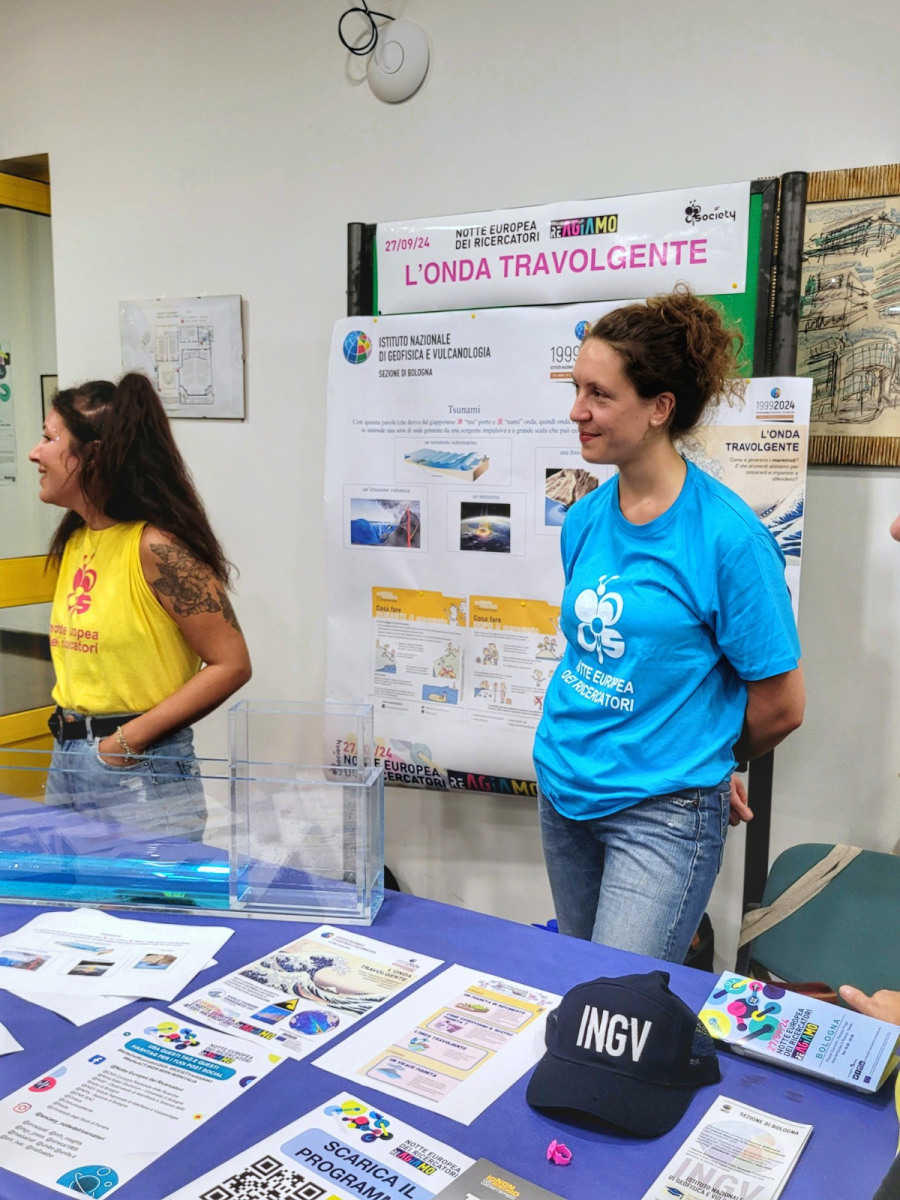
In October 2024, she took part in the Researchers’ Night in Bologna, where she helped animate the INGV stand on tsunamis. Through interactive demonstrations, she explained the mechanics of tsunami generation and the crucial role of researchers in studying and mitigating tsunami risks. Her efforts contributed to raising public awareness of these natural hazards and the ongoing scientific advancements in the field.
References
(1) Koffi M., Innovative ideas and gender inequality. https://www.econstor.eu/handle/10419/234474. EconStor (2021). Accessed 21 Feb 2025.
(2) Sarsons H., Recognition for group work: Gender differences in academia. Am. Econ. Rev. 107, 141–145 (2017).